
Introduction
The publishing industry has undergone a monumental transformation over the past decade. The traditional gatekeepers of the literary world no longer hold a monopoly on who gets to share their stories, insights, or business strategies with the public. Today, self-publishing and hybrid publishing models have democratized the landscape, allowing anyone with a manuscript to become a published author. However, this democratization comes with a significant shift in responsibility. As a self-published or indie author, you are no longer just a writer; you are a publisher, a project manager, and a business owner.
With this shift, one of the most critical questions aspiring authors face is: How Much Should You Budget for Publishing Your First Book Successfully? While it is technically possible to upload a raw manuscript to digital platforms for free, doing so rarely results in commercial success, critical acclaim, or professional credibility. To compete in a crowded marketplace where millions of books are published annually, your book must meet or exceed the production quality of traditional publishing houses. This level of quality requires a strategic financial investment. In this comprehensive guide, we will break down every cost associated with publishing, map out realistic budget tiers, expose hidden fees, and help you allocate your resources to maximize your book’s return on investment (ROI).
Breaking Down the Core Pillars of a Book Budget
To understand How Much Should You Budget for Publishing Your First Book Successfully?, you must first understand where your capital actually goes. Producing a professional-grade book requires three core pillars: editorial services, design and formatting, and marketing/distribution. Cutting corners on any of these pillars can severely undermine your book’s market viability.
1. Editorial Services (The Foundation of Quality)
Editing is the single most important investment you will make in your book. No matter how compelling your plot or how revolutionary your business framework, grammatical errors, structural plot holes, and poor pacing will alienate readers and generate negative reviews. Professional editing is typically broken down into three distinct phases:
- Developmental Editing: This high-level edit examines the big picture. For fiction, the editor analyzes plot structure, character development, pacing, and thematic consistency. For non-fiction, they evaluate the logical flow of arguments, the clarity of concepts, and the overall organization of the material. Developmental editing is usually the most expensive, costing between $0.02 and $0.04 per word. For an 80,000-word manuscript, this equates to $1,600 to $3,200.
- Copyediting: This phase focuses on the mechanics of your writing. A copyeditor refines sentence structure, improves readability, corrects syntax, and ensures stylistic consistency (often adhering to the Chicago Manual of Style). Copyediting rates generally range from $0.015 to $0.025 per word, costing $1,200 to $2,000 for an 80,000-word book.
- Proofreading: The final line of defense before publication. A proofreader searches for typographical errors, misspelled words, punctuation mistakes, and minor formatting glitches. Proofreading is the least expensive edit, typically costing $0.01 to $0.015 per word ($800 to $1,200 for an 80,000-word manuscript).
2. Cover Design and Interior Formatting
Humans are inherently visual creatures, and despite the old adage, readers absolutely judge books by their covers. Your book cover is your primary marketing tool; it must instantly convey your book’s genre, tone, and quality level to browsing shoppers. A generic or amateur cover will actively repel buyers.
- Custom Cover Design: Hiring a professional book cover designer who understands your specific genre’s visual language is essential. High-quality custom covers typically cost between $300 and $1,200. This should include designs optimized for both digital (eBook) and print formats (paperback/hardcover wrap).
- Interior Formatting (Typesetting): Professional formatting ensures that your book’s text is comfortable to read across all devices and print sizes. This includes proper margins, font choices, drop caps, chapter header designs, and page numbering. Professional formatting can cost anywhere from $150 to $600 depending on the complexity of the layout (e.g., non-fiction books with charts, tables, and callout boxes cost more to format than straight fiction).
3. Marketing and Distribution Setup
Writing a masterpiece is only half the battle; the other half is ensuring that your target audience knows it exists. A successful book launch requires a dedicated marketing budget. This includes setting up your distribution channels, purchasing barcodes, securing reviews, and running paid advertising campaigns. A baseline marketing budget of $500 to $2,000 is highly recommended for a successful launch.
Defining Your Budget Tier: From DIY to Premium Publishing
The total cost of publishing varies wildly depending on your goals, your genre, and your personal skill set. To help you determine How Much Should You Budget for Publishing Your First Book Successfully?, we have categorized the publishing costs into three distinct budget tiers.
The Bootstrapper Tier ($500 – $1,500)
The Bootstrapper Tier is designed for authors with limited capital who are willing to trade their own time and labor for financial savings. In this tier, you will do much of the heavy lifting yourself. You might use advanced software programs like Grammarly or ProWritingAid for initial self-editing, rely on beta readers for structural feedback, and hire a budget-friendly freelance copyeditor or proofreader on platforms like Upwork or Fiverr.
For design, you might purchase a high-quality pre-made cover from a professional design site (which can cost between $100 and $200) rather than commissioning a custom illustration. Formatting can be done using DIY software like Atticus or Vellum, which require a one-time purchase fee of around $150 to $250. Marketing in this tier relies heavily on organic strategies, such as building a personal social media presence, participating in newsletter swaps, and leveraging your personal network for early reviews.
The Professional Tier ($2,000 – $5,000)
This is the industry standard for authors who want to establish a serious writing career or use their book as a professional calling card. In the Professional Tier, you outsource all major production tasks to proven industry experts. You will hire a dedicated developmental editor or copyeditor, a professional cover designer who specializes in your genre, and a skilled interior formatter.
Additionally, this budget allows for a structured marketing launch, including running targeted Amazon and Meta ads, utilizing review-generation services like NetGalley or BookSprout, and building a professional author website. This tier offers the best balance of cost and quality, ensuring your book stands shoulder-to-shoulder with traditionally published titles on virtual shelf space.
The Premium/Hybrid Tier ($6,000 – $15,000+)
The Premium Tier is tailored for corporate executives, entrepreneurs, public speakers, and high-profile individuals who require flawless execution and have limited time to manage the publishing process themselves. In this tier, authors often hire full-service publishing agencies or elite service providers to handle every aspect of the project from conception to distribution.
This tier often includes comprehensive ghostwriting, high-end developmental editing, bespoke cover illustrations, professional audiobook production, public relations campaigns, and extensive paid advertising strategies. For busy professionals who want to ensure their ideas are translated into a highly polished, authoritative book, partnering with an established creative agency is the optimal route. For instance, working with a specialized agency like Ghostwriting Saga allows authors to access world-class ghostwriting, editing, and publishing consultation, transforming raw concepts into market-ready books that elevate their professional brand.
Book Publishing Budget Breakdown Table
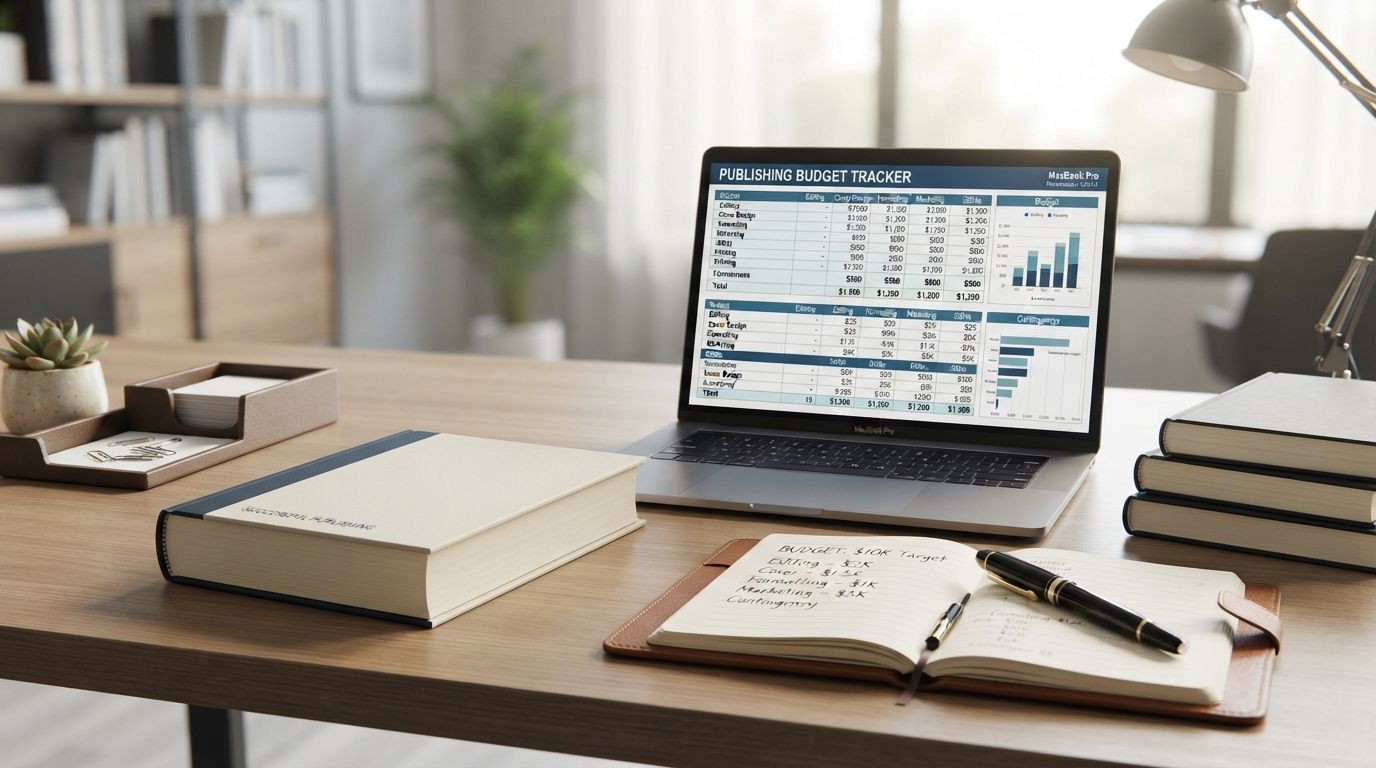
To help you visualize where your money goes across these different tiers, we have compiled a detailed cost breakdown. This table provides a realistic estimation of the expenses you will encounter when planning your publishing budget.
| Service / Expense Category | Bootstrapper Budget ($) | Professional Budget ($) | Premium Budget ($) |
|---|---|---|---|
| Developmental Editing | $0 (Self-edited / Beta Readers) | $1,200 – $2,500 | $3,000 – $6,000+ |
| Copyediting & Proofreading | $300 – $600 | $800 – $1,500 | $1,500 – $3,000 |
| Cover Design (eBook & Print) | $100 – $250 (Pre-made/Basic) | $400 – $800 (Custom) | $1,000 – $2,500+ (Bespoke/Illustrated) |
| Interior Formatting / Layout | $150 – $250 (DIY Software) | $200 – $500 (Professional) | $600 – $1,200 (Complex/Custom Layout) |
| ISBNs & Barcodes | $0 (Free KDP ISBN) | $125 – $295 (Owned ISBNs) | $295 (10-pack of ISBNs) |
| Launch Marketing & Ads | $100 – $300 | $500 – $1,500 | $2,000 – $5,000+ |
| Administrative & Miscellaneous | $50 – $100 | $150 – $300 | $500 – $1,000 (LLC, Copyright, etc.) |
| Estimated Total Investment | $700 – $1,500 | $3,375 – $7,395 | $8,895 – $19,000+ |
The Hidden Costs of Self-Publishing
When calculating How Much Should You Budget for Publishing Your First Book Successfully?, many first-time authors fail to account for administrative, legal, and operational expenses. These hidden costs can quickly stack up and disrupt your financial planning if you do not prepare for them from the outset.
ISBN Ownership
An ISBN (International Standard Book Number) is a unique 13-digit commercial book identifier. While platforms like Amazon KDP and Draft2Digital offer free ISBNs, these come with major limitations: you cannot use that same ISBN to sell your book through other distributors, and the publisher of record will be listed as the platform, not you. To maintain complete control and professional credibility, you should purchase your own ISBNs. In the United States, Bowker is the official provider. A single ISBN costs $125, while a pack of 10 costs $295. Buying the 10-pack is highly recommended, as you will need a separate ISBN for each format of your book (eBook, paperback, hardcover, and audiobook).
Copyright Registration
While your work is technically copyrighted the moment you write it down, registering your copyright with the U.S. Copyright Office (or your country’s equivalent) provides essential legal protections and public record evidence of ownership. This is crucial if you ever need to pursue legal action for copyright infringement. The filing fee for a single author/single work is relatively low, typically ranging from $45 to $65, but it is an administrative step you must budget for.
Proof Copies and Shipping
Before making your book available to the public, you must order physical proof copies to verify the formatting, paper quality, cover alignment, and color accuracy. It is common to order multiple proofs as you make adjustments. Factor in $50 to $100 for ordering and shipping these physical proofs to your home.
Business Formation and Legal Setup
Many professional authors choose to set up a Single-Member LLC (Limited Liability Company) to publish their books. Operating under an LLC protects your personal assets from any business liabilities, separates your personal and business finances, and can offer tax advantages. Depending on your state or country, registering an LLC can cost between $50 and $500, plus any annual filing fees.
Allocating Funds for a Successful Book Launch
A beautifully designed, perfectly edited book will sit quietly on digital shelves unless you actively drive traffic to it. A successful book launch requires a deliberate, well-funded marketing strategy. When deciding How Much Should You Budget for Publishing Your First Book Successfully?, you should aim to allocate at least 30% of your total budget specifically to marketing and promotion.
Paid Advertising Channels
Organic reach is incredibly difficult to achieve on modern retail platforms. To gain initial traction, you must invest in paid advertising. The two most effective platforms for authors are Amazon Ads and Meta (Facebook/Instagram) Ads. Amazon Ads target readers who are actively looking to buy books in your genre, while Meta Ads are excellent for building brand awareness and capturing email leads. Budget at least $5 to $10 per day ($150 to $300 for the launch month) to run test campaigns and optimize your ad copy.
Review Generation and Editorial Reviews
Social proof is the lifeblood of book sales. Customers are hesitant to buy a book that has zero reviews. To secure early reviews, you can use services like NetGalley, BookSprout, or Voracious Readers Only. These platforms distribute advance review copies (ARCs) to eager readers in exchange for honest reviews. A subscription or listing fee on these platforms can range from $50 to $300, but the reviews they generate are invaluable for converting casual browsers into paying customers.
Email Marketing Infrastructure
Your email list is your most valuable long-term asset as an author. Unlike social media algorithms, your email list allows you to communicate directly with your most dedicated fans. To build and maintain this list, you will need to budget for an email service provider (such as MailerLite, ConvertKit, or Mailchimp). While many offer free tiers for your first 1,000 subscribers, premium features and larger lists will cost between $15 and $50 per month.
Key Takeaways for Budgeting Your First Book
- Quality is Non-Negotiable: Never compromise on professional editing and cover design. These two elements directly dictate your book’s credibility and commercial potential.
- Match Your Budget to Your Goals: If you are writing a hobby book for family and friends, a Bootstrapper budget ($500 – $1,500) is fine. If you are building a professional brand or business career, aim for the Professional Tier ($2,000 – $5,000).
- Account for Hidden Fees: Don’t get caught off guard by the costs of purchasing ISBNs, registering copyrights, ordering physical proofs, and forming an LLC.
- Save Capital for Marketing: A great book without marketing is invisible. Allocate at least 30% of your total publishing capital to launch-week ads, review generation, and audience building.
- Consider Long-Term ROI: View your publishing costs as capital investments in a business asset. A well-produced book can generate royalties, secure high-paying speaking gigs, and attract premium business clients for years to come.
Frequently Asked Questions
Can I publish a book successfully for free?
While you can technically publish a book for zero dollars by using free tools and platforms, it is extremely difficult to do so “successfully” in a competitive commercial market. Without professional editing and a high-quality cover, your book will likely struggle to gain traction, generate positive reviews, or generate meaningful sales. If you are on a very tight budget, focus on maximizing sweat equity (e.g., extensive self-editing, beta readers) and invest whatever small budget you have into a professional cover.
How much does professional editing cost for a standard 80,000-word book?
For a standard 80,000-word manuscript, professional copyediting typically costs between $1,200 and $2,000, depending on the editor’s experience and the complexity of the text. If you require developmental editing as well, the price can increase by another $1,600 to $3,200. Combining copyediting and proofreading is usually the minimum requirement for a professional-grade release.
Should I use Amazon’s free ISBN or buy my own?
If your goal is to publish purely as a hobby or solely on Amazon, a free ISBN is acceptable. However, if you want to distribute your book to libraries, physical bookstores, and other online retailers (like Barnes & Noble, Kobo, and Apple Books), you should buy your own ISBN. Purchasing your own ISBN lists you or your imprint as the publisher of record, ensuring maximum control and industry credibility.
How much should I spend on my book cover?
You should expect to spend between $300 and $800 for a high-quality, custom-designed book cover. This investment ensures that your book fits the visual expectations of your specific genre while standing out on digital retail storefronts. Avoid cheap, automated cover generators, as they often look unprofessional and fail to capture reader interest.
How long does it take to recoup my publishing budget?
The payback period varies greatly depending on your marketing efforts, your genre, your pricing strategy, and whether you have a backlist of other books. Some authors recoup their costs within the first month of a successful launch, while others take a year or more. Many business-minded authors recoup their costs indirectly by using their book as a lead generator to secure high-ticket clients, consulting projects, or speaking engagements.
Conclusion: Investing in Your Author Journey
Understanding How Much Should You Budget for Publishing Your First Book Successfully? is the first step toward building a sustainable, profitable career as an author. Publishing a book is not merely an act of creative expression; it is a business venture that requires careful financial planning, strategic resource allocation, and a commitment to quality. By treating your book as an asset and investing in professional editing, eye-catching design, and targeted marketing, you position yourself far ahead of the competition.
Whether you choose to bootstrap your project, hire independent specialists, or partner with a comprehensive agency to manage the process, remember that every dollar spent on producing a high-quality book is an investment in your personal brand, your intellectual property, and your long-term success. Plan your budget wisely, execute your launch strategy with discipline, and take pride in releasing a book that meets the highest standards of literary excellence.


